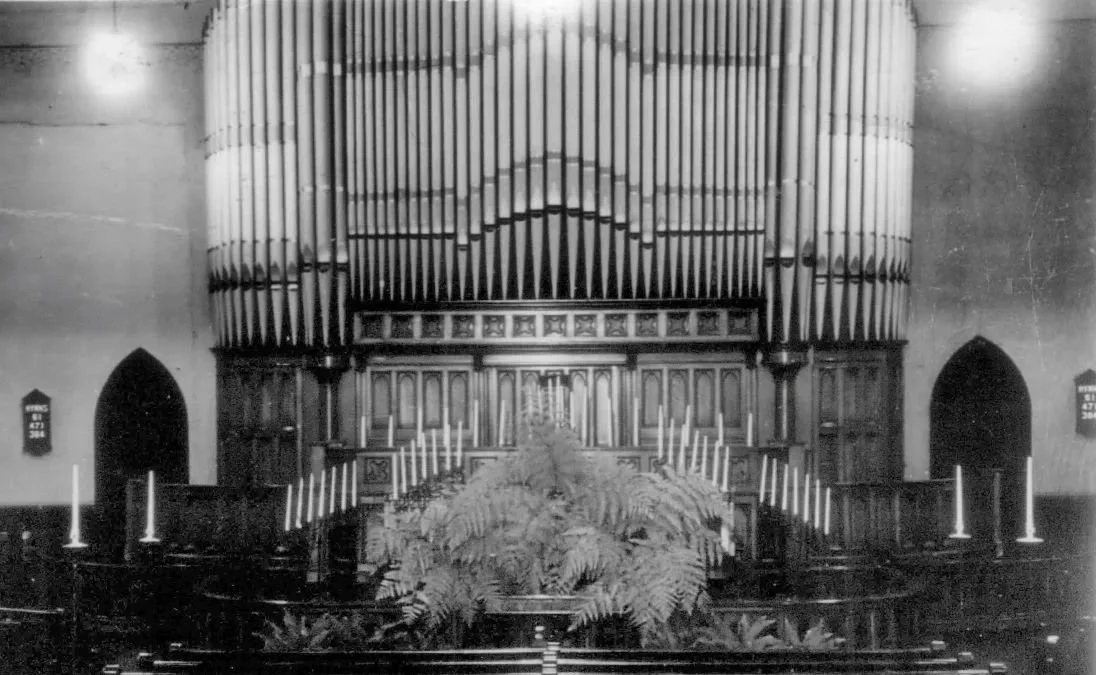
History of the Organ
at the corner of Broad and Thorn
A Living Instrument with a Living History
Music has long played an important — and sometimes contested — role in worship at Sewickley United Methodist Church. From early debate to lasting tradition, the story of the organ at SUMC reflects a congregation continually discerning how music shapes faith and community.
1864 - A Cabinet Organ and a Turning Point
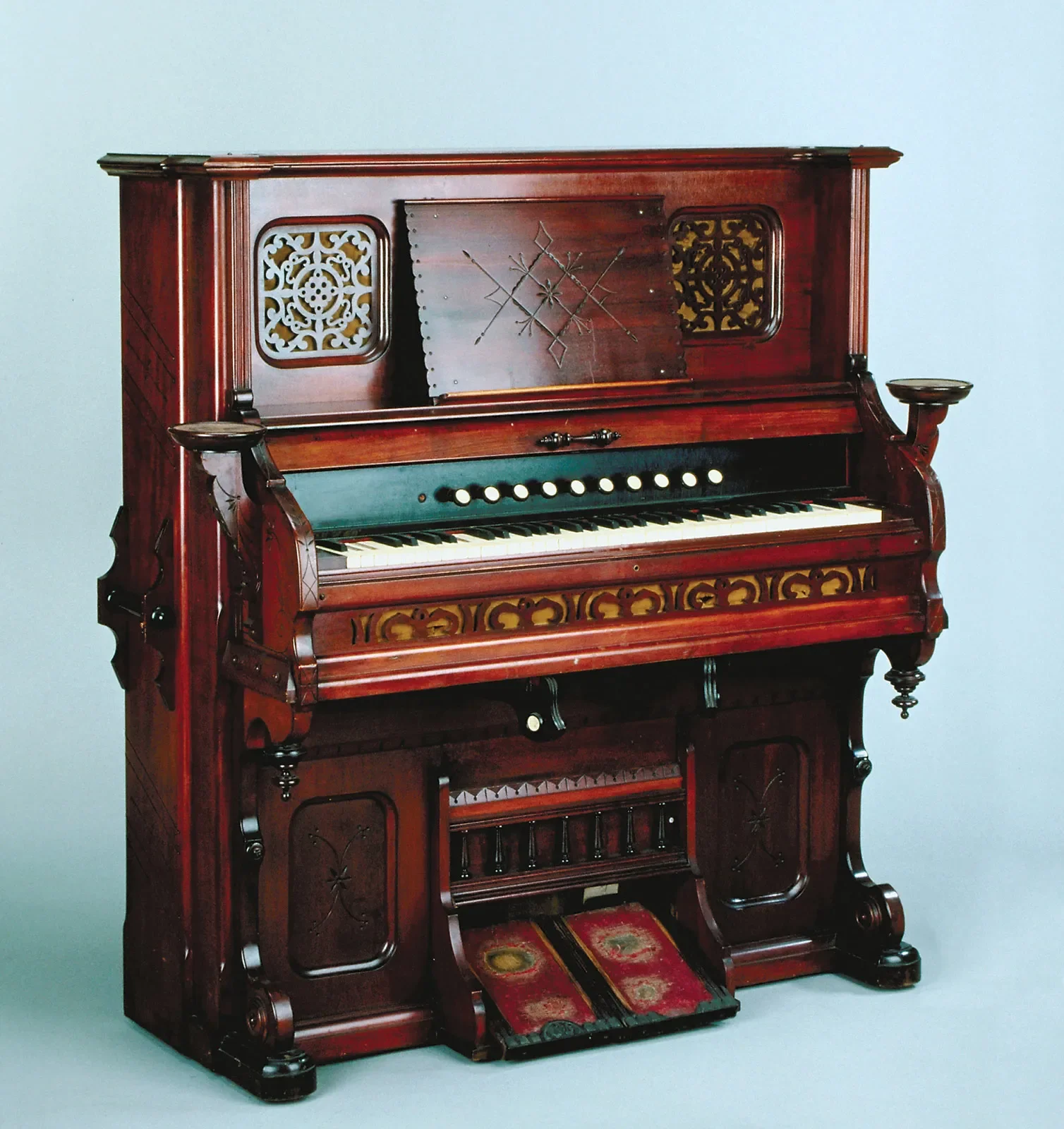
The church’s relationship with keyboard instruments began in 1864, during the Civil War, when a cabinet organ was purchased to beautify the second church building constructed on this site in 1854. At the time, the decision was controversial. Many Methodists believed that instrumental music — particularly organs — conflicted with Methodist worship traditions.
The leadership vote was narrow: 18 of 28 leaders voted in favor of purchasing the organ.
Opposition ran deep. On a Saturday night, dissenters secretly removed the newly purchased instrument and placed it on Thorn Street, where it was discovered the following Sunday morning.
While the cabinet organ itself did not remain, this moment proved to be a turning point. Rather than ending the conversation about instrumental music, it deepened it — ultimately opening the door to a more enduring and widely accepted solution.
1883 - The First Organ: Hook & Hastings
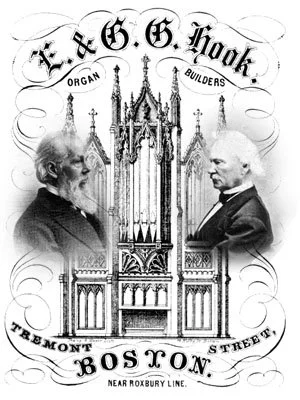
The first pipe organ at Sewickley United Methodist Church was installed in 1883 by the distinguished Boston firm Hook & Hastings, one of the most respected American organ builders of the 19th century. Designated Opus 1175, this instrument firmly established the pipe organ as central to worship at the church during a period of growth and vitality.
Hook & Hastings instruments were renowned for their craftsmanship, tonal warmth, and durability. These qualities made them a natural choice for a prominent and growing congregation.
1909 - A New Instrument for a Century
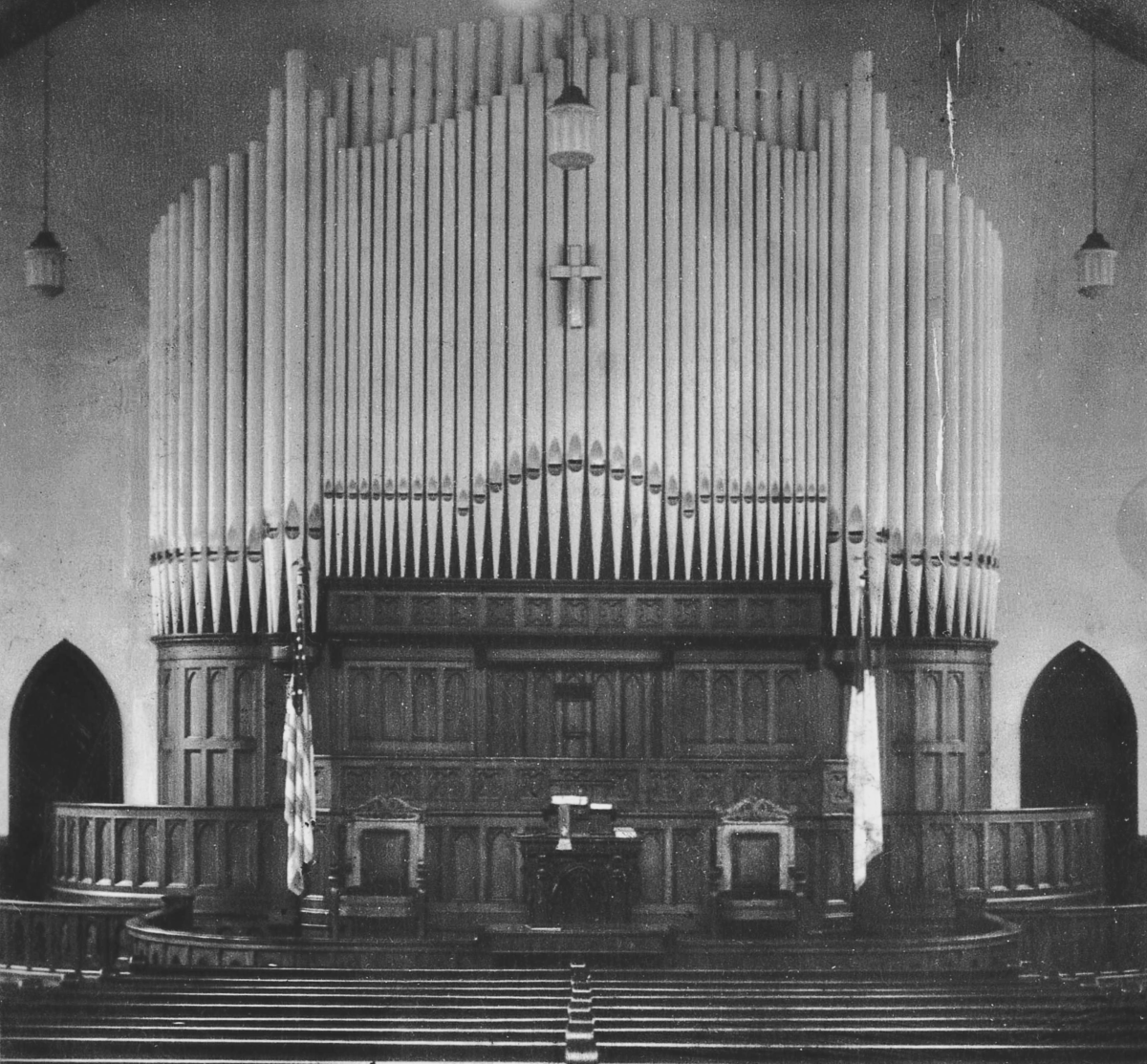
As musical needs evolved at the turn of the 20th century, the church installed a new pipe organ in 1909, built by the M. P. Möller Pipe Organ Company of Hagerstown, Maryland. Designated Opus 1014, this instrument replaced the earlier Hook & Hastings organ and reflected advances in organ design, technology, and tonal resources.
With two manuals, three divisions, and 32 registers, the Möller organ became the primary musical voice of the sanctuary — supporting congregational singing, choral accompaniment, and worship for generations.
This organ was funded half by the congregation and a matching half by Andrew Carnegie.
1966 - Restoration with Intentional Preservation
In 1966, the organ underwent a major restoration by Tellers Organ Company (Opus 1016). This project was guided by a documented and intentional decision to reuse all existing pipework, as specified in the contract for work.
Rather than replacing pipes, the restoration focused on rebuilding and stabilizing the existing instrument, installing a new console, and updating mechanical and electrical systems — all while preserving the tonal identity that had developed over decades. This decision reflects an early and enduring commitment to preservation over replacement.
2014 - Preservation, Restoration, and Expansion
By 2014, the organ was in significant need of repair after decades of continuous service. The restoration led by Steiner-Murphy Organ Company emphasized preserving historic materials wherever possible, requiring extensive craftsmanship and careful attention to detail.
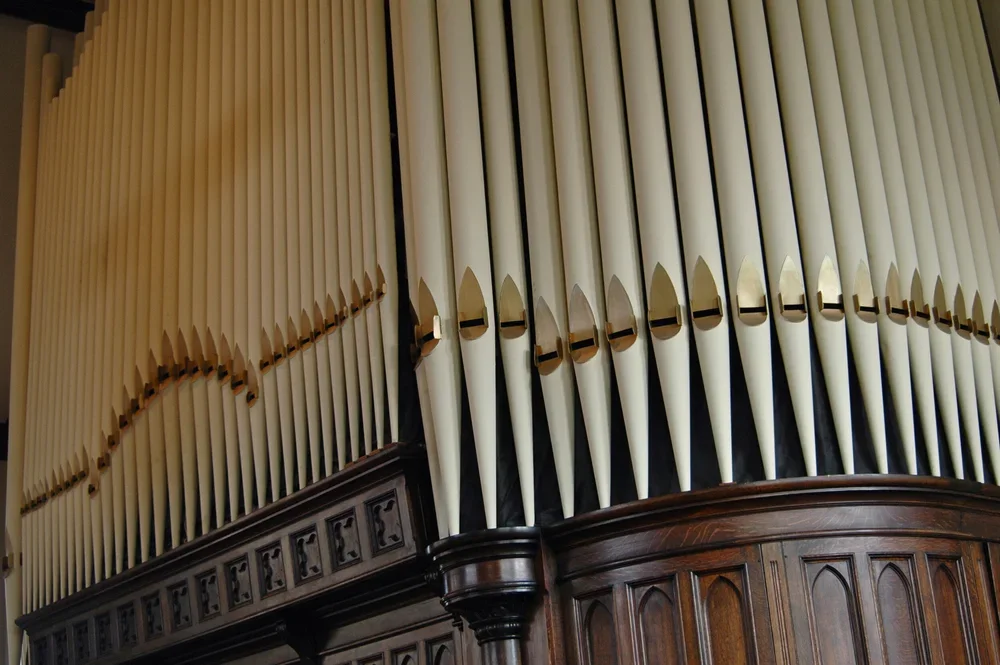
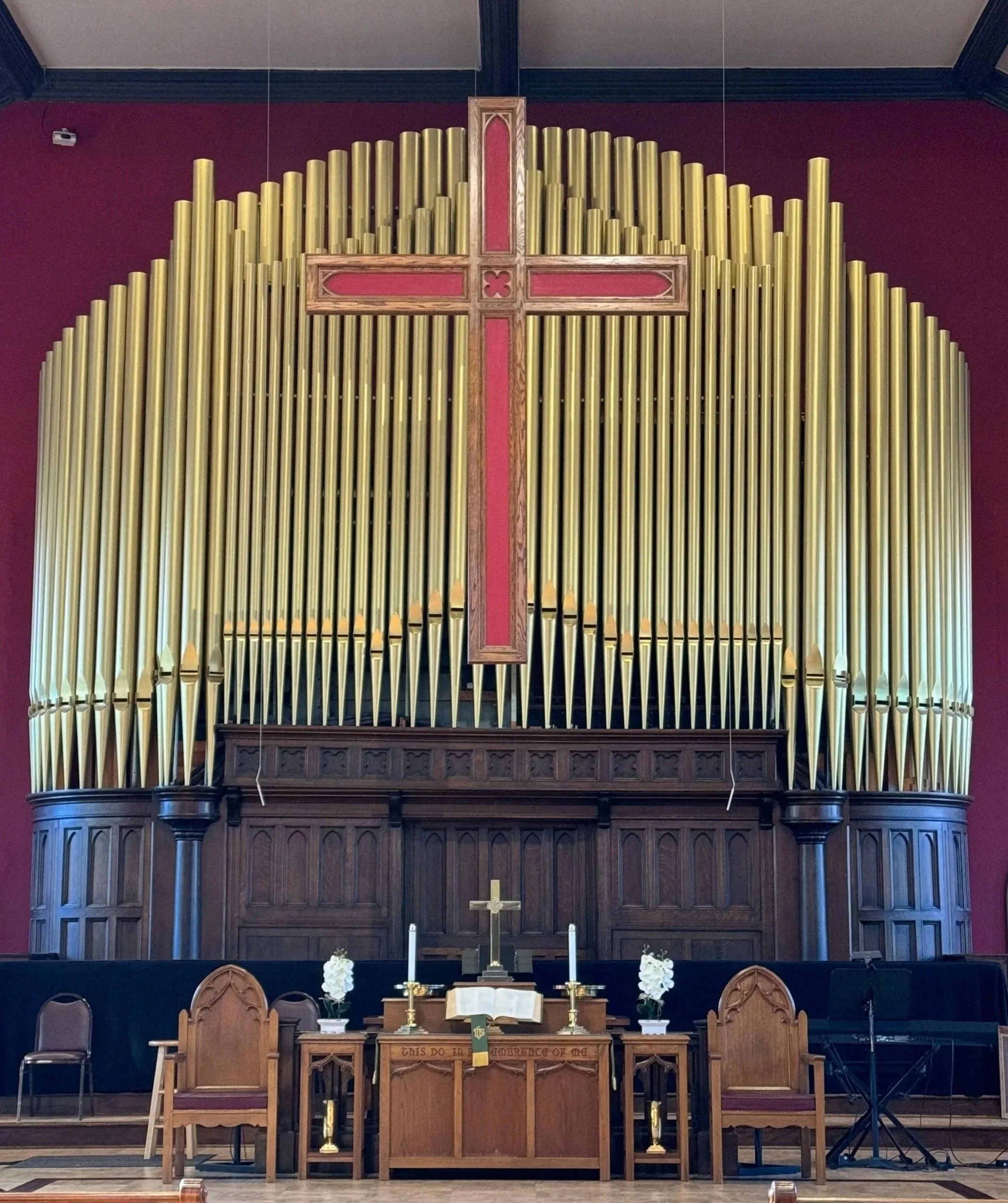
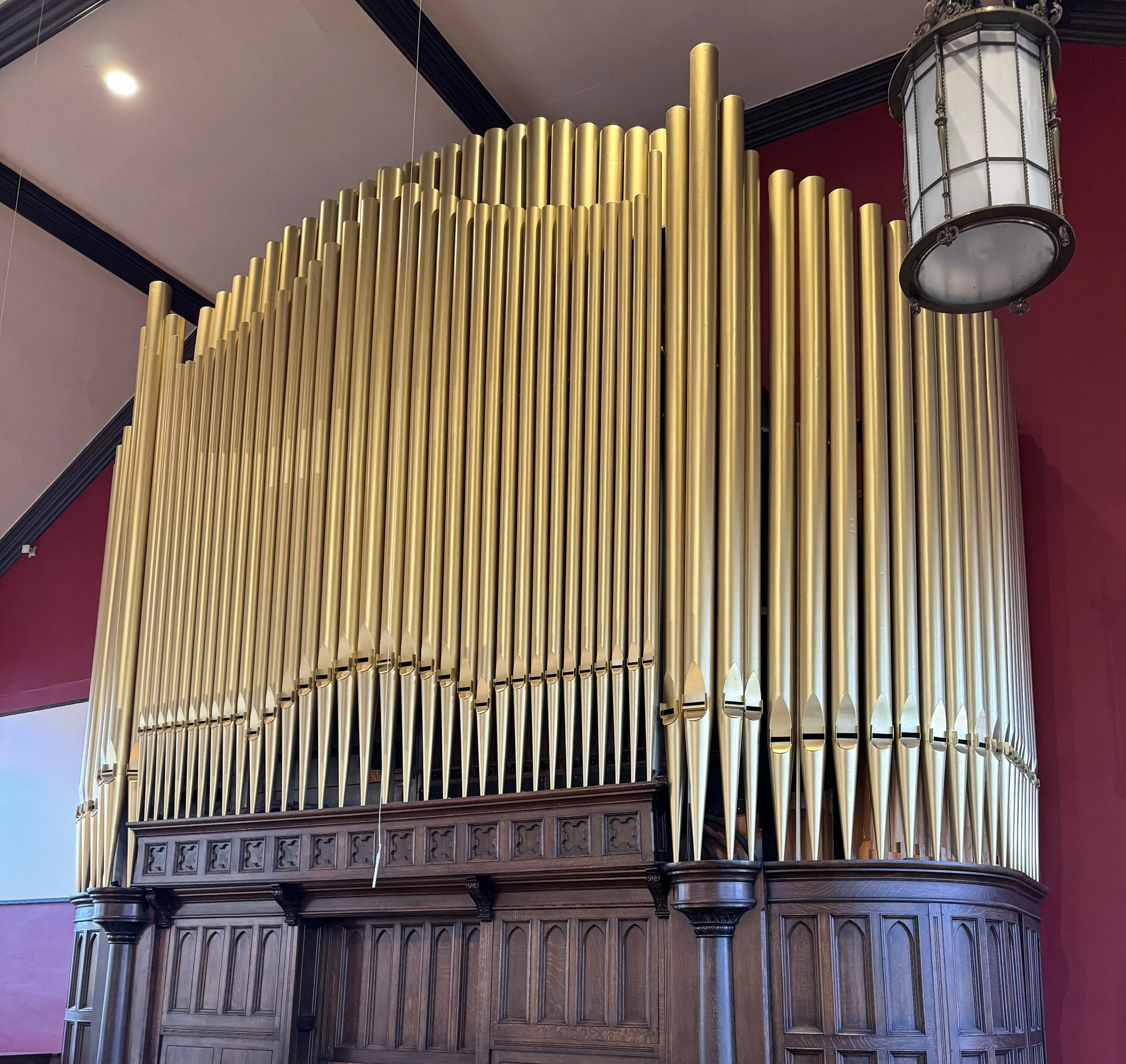
A great deal of work was devoted to saving and restoring original pipework, including the highly visible façade pipes, which were in particularly poor condition. These pipes underwent intensive restoration to stabilize, repair, and preserve both their sound and appearance.
At the same time, significant effort was invested in preserving the wood organ casework dating from 1909. This historic casework — an integral part of the instrument’s visual and architectural presence in the sanctuary — required careful conservation to maintain its structural integrity, finish, and historic character.
While this restoration accomplished substantial rebuilding and expansion, the original restoration plans were implemented in phases, with some elements intentionally deferred to a later stage to ensure careful stewardship and responsible use of resources. As part of this work, the Great and Choir divisions were restored, while restoration of the Swell and Pedal divisions was deferred.
As a result of this work, the instrument was rebuilt and enlarged into a four-division organ, integrating historic pipework into a more flexible and capable instrument for modern worship and concert use — all while remaining deeply rooted in its historic fabric.
Today - Organ Specifications and Musical Resources
Today, the Sewickley United Methodist Church organ stands as a robust and expressive instrument designed to serve worship, education, and community concerts.
Manuals & Divisions
Great
Swell
Choir
Pedal
Pipes & Stops
53 speaking stops
Approximately 3,000+ pipes, ranging from the smallest delicate pipes to large foundational ranks
A diverse tonal palette including:
Principal and diapason foundations
Flutes of varying colors and scales
String and celeste voices
Reed stops such as trumpet, oboe, and clarion
Mixtures and pedal ranks providing clarity, depth, and power
Console & Technology
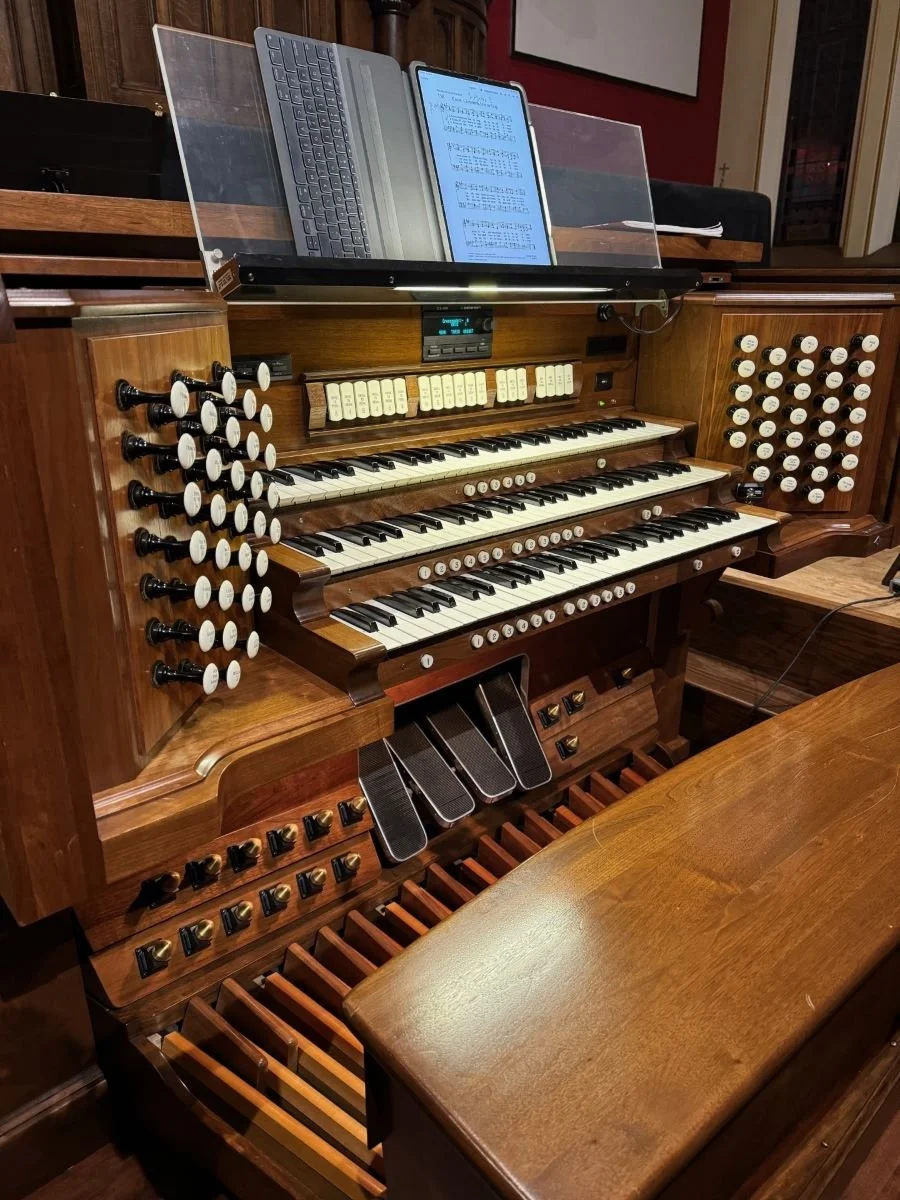
Three-manual console
Peterson ICS-4000 solid-state organ control system
Modern digital combination action
MIDI capability for flexibility and future expansion
Updated electrical and control systems
Ergonomic design meeting AGO standards
Completing the Restoration: The Pedal and Swell Divisions
While the 2014 restoration addressed many critical needs and preserved significant historic pipework and casework, the Swell and Pedal divisions remain in need of comprehensive restoration.
The Swell Division is one of the organ’s most expressive components. Enclosed within expression shutters, it allows the organist to shape sound dynamically — from quiet, prayerful accompaniment to powerful crescendos — and is essential for hymn leadership, choral support, and much of the core organ repertoire.
The Pedal Division provides the foundation of the organ’s sound, supporting congregational singing with depth, stability, and clarity. Its reliability is critical to the overall balance and integrity of the instrument.
Because both divisions were deferred during the 2014 phase, they still rely on older components that now require comprehensive attention, affecting reliability, tonal balance, and full integration with the rest of the organ.
The Next Phase: Completing the Vision
The next phase of the Restore the Organ project will focus on a complete rebuilding of the Swell and Pedal divisions, including:
Restoration and revoicing of existing pipework
Repairs to windchests, wind supply, and expression mechanisms
Updates to electrical and control systems
Tonal finishing to fully integrate the Swell and Pedal with the Great and Choir divisions
This work will complete the long-term restoration plan, allowing all four divisions of the organ to function together as a cohesive, expressive whole.
Organist: Douglas-Jayd Burn
A Legacy of Care - A Commitment to the Future
From the installation of the first organ in 1864, to the reuse of historic pipework in 1966, to the painstaking preservation of pipes and 1909 casework in 2014, the history of the SUMC organ is a story of intentional care, skilled craftsmanship, and faithful stewardship.
Completing the Swell and Pedal Division restoration will:
Restore the organ’s full expressive and foundational range
Improve reliability for worship and concerts
Enhance choral accompaniment and solo repertoire
Secure the instrument’s musical future for generations
With this final phase complete, the Sewickley United Methodist Church organ will once again stand fully restored — musically, mechanically, and expressively — continuing its role as a living voice of worship, beauty, and community.